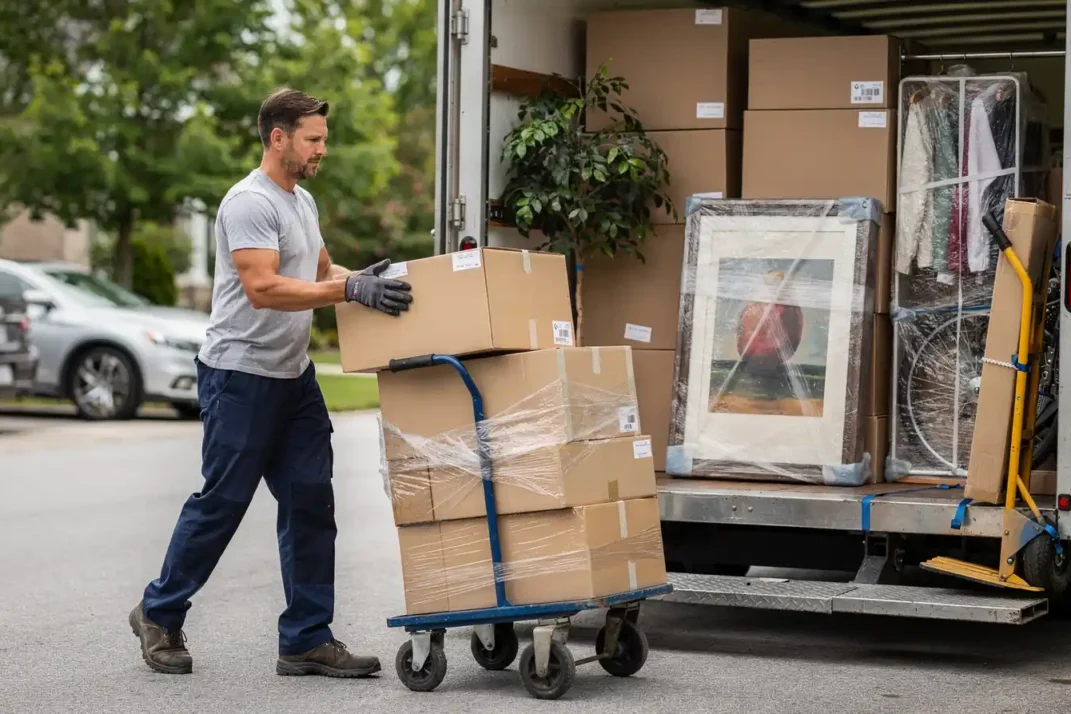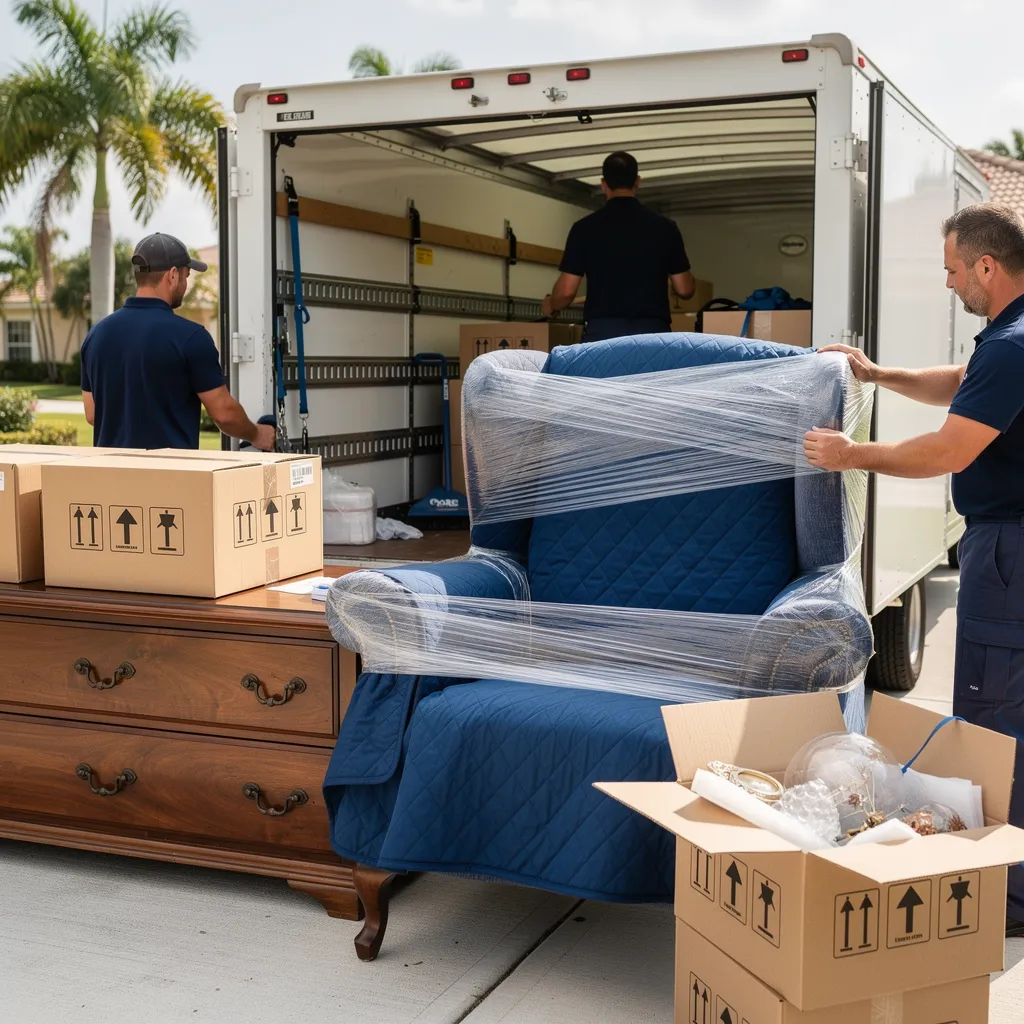
When it comes to How Do Your Moving. Storage Services Ensure the Safety of My Belongings?, professional movers at DeVries Family Moving & Storage in Port St. Lucie, Florida, wrap furniture in padded moving blankets, secure items with shrink wrap, and use sturdy boxes for fragile belongings. Trucks are loaded with straps and dividers that pr
Professional movers safeguard belongings through trained personnel, quality-grade packing materials, and proper equipment for loading and transport, answering the common question of how do your moving and storage services ensure the safety of my belongings. DeVries Moving & Storage, serving Port St. Lucie, uses experienced crews and customizable protection methods for fragile, valuable, and sentimental items, which helps reduce damage risk. The company also maintains a Better Business Bureau A+ rating throughout every residential or commercial relocation.
What Happens Before Movers Even Touch Your Boxes?
Protection of household goods starts long before a single carton reaches the truck. Ensuring the safety of belongings begins with verification, planning, and paperwork — not packing tape. Skipping this groundwork is where most moving disasters originate.
The Federal Motor Carrier Safety Administration (FMCSA) offers a free registered mover database, letting customers confirm a company’s legal standing before any commitment. A quick search reveals whether a mover carries active operating authority. Skipping this step leaves customers exposed to unlicensed operators with no accountability.
What rights does a customer have during an interstate move?
Federal regulations outline specific rights and responsibilities for anyone relocating across state lines. Customers should review these protections before signing an order for service. That document governs liability, delivery timing, and cost disputes. Understanding these terms in advance prevents costly misunderstandings on moving day.
DeVries Moving & Storage builds its own safeguards into the pre-move process:
- A free, on-site estimate evaluates the home, inventory, and access points before any labor begins.
- Advance scheduling, ideally four to six weeks out, gives the crew time to plan packing materials, equipment, and staffing around fragile or high-value items.
- Decades of regional experience inform how the team handles Florida’s climate, stairwells, and tight condo hallways common along the Treasure Coast.
Why does advance notice matter for protecting valuables?
Rushed bookings limit preparation time for specialty crating or climate-conscious packing. A four-to-six-week window allows the team to source the right materials for pianos, artwork, or antiques ahead of moving day. That lead time turns a reactive scramble into a controlled process.
DeVries Moving & Storage has served the Treasure Coast. South Florida for more than two decades, holding a Better Business Bureau A+ rating. A reflection of consistent, accountable service before boxes ever move.
How Do Movers Pack and Wrap Fragile Items?
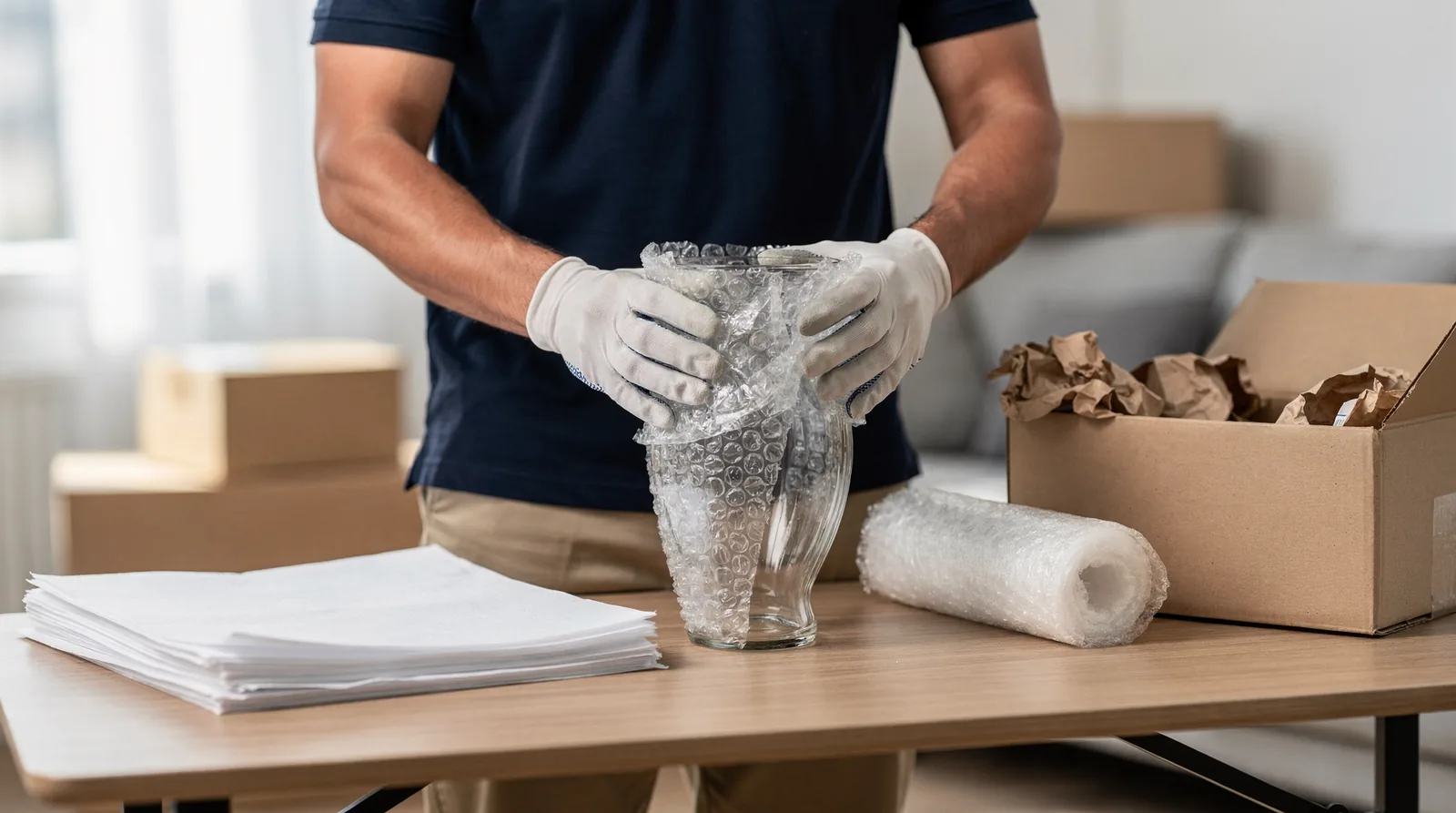
Sturdy, double-walled boxes form the first line of defense against crushing or collapse during transit. Weak or single-walled containers buckle under stacked weight, exposing dishware, electronics, and heirlooms to cracks and dents that surface only after the truck is unloaded. Reinforced boxing gives fragile items structural support the entire trip, absorbing pressure that would otherwise transfer directly to the contents.
Box strength alone doesn’t finish the job. Each delicate item gets wrapped individually in bubble wrap or packing paper before it ever enters a box, creating a cushioned barrier that stops surface-to-surface contact. That barrier matters most in tight cargo spaces. Shifting boxes rub and jostle against one another for hours at a time.
DeVries Moving & Storage builds safe, secure packing of belongings into every household relocation as a standard step, not an add-on service. This approach reflects a broader commitment to worry-free handling, backed by well-maintained equipment and facilities designed to keep possessions stable from pickup through delivery.
What Materials Protect Fragile Items Best?
Layered protection outperforms any single material. Effective packing typically combines:
- Double-walled boxes for load-bearing strength
- Bubble wrap for cushioning curved or delicate surfaces
- Packing paper for filling gaps and preventing shifting
Do All Movers Wrap Items the Same Way?
Not every mover applies the same standard. Some crews rely on thin boxes and minimal padding, leaving valuables exposed to compression damage. Consistent use of reinforced boxing and individual wrapping, paired with dependable equipment, separates careful movers from those cutting corners on protection.
How Do Movers Handle Specialty and Valuable Items?
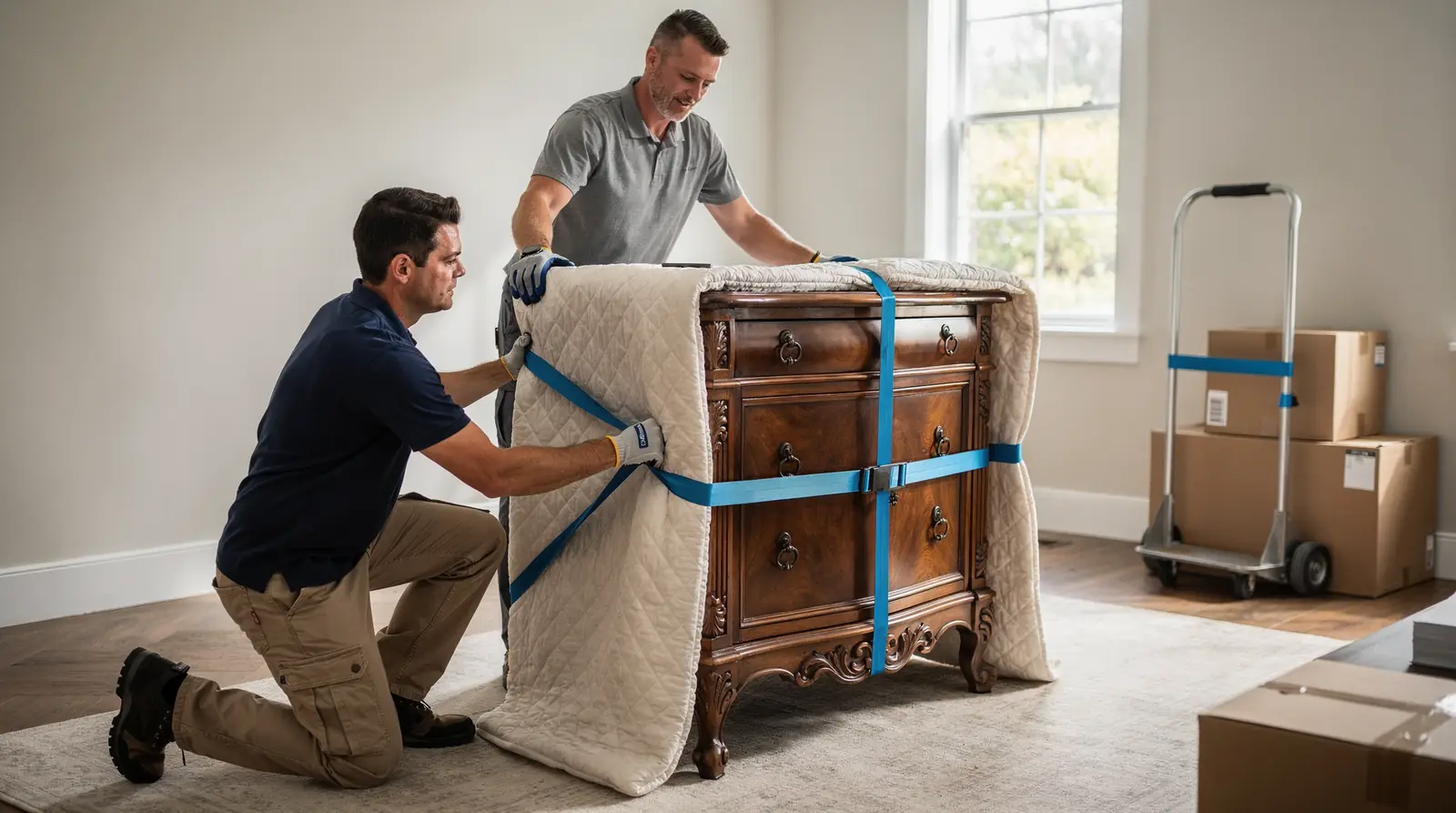
Specialty items demand different handling than standard household boxes. Skipping proper protocol on a piano, an heirloom painting, or a military service member’s belongings risks cracked finishes, torn canvas, and irreplaceable losses no insurance check can undo. DeVries Moving & Storage assigns dedicated specialty moving services for military relocations, pianos, fine art, and antiques, matching equipment and technique to the object rather than forcing a one-size-fits-all approach. Familymoving.Com
International moves raise the stakes further. As a Wheaton World Wide interstate agent, DeVries extends its protective handling network beyond state lines into overseas relocations, so fragile or high-value shipments follow consistent protocols from origin to destination. Familymoving.Com
Two client-side habits strengthen that protection even more.
Should clients inventory their valuables before the movers arrive?
Yes. Building an inventory list of valuables before moving day confirms nothing goes missing or damaged in transit. A simple room-by-room list, cross-checked at delivery, gives clients a clear record and gives the moving team a shared reference point.
Is photographing valuables actually necessary before loading?
It is, particularly for high-value categories. Photographing antiques, electronics, and jewelry documents their exact condition before loading begins, creating a timestamped baseline for comparison after arrival.
Together, these steps form a practical checklist:
- Compile a written inventory of fragile, antique, or sentimental items.
- Photograph or video high-value pieces from multiple angles.
- Flag specialty items in advance so movers can plan equipment and materials.
- Confirm military, piano, or fine-art handling needs before the move date.
This combination of trained specialty crews and client-documented records reduces the guesswork that leads to damage claims.
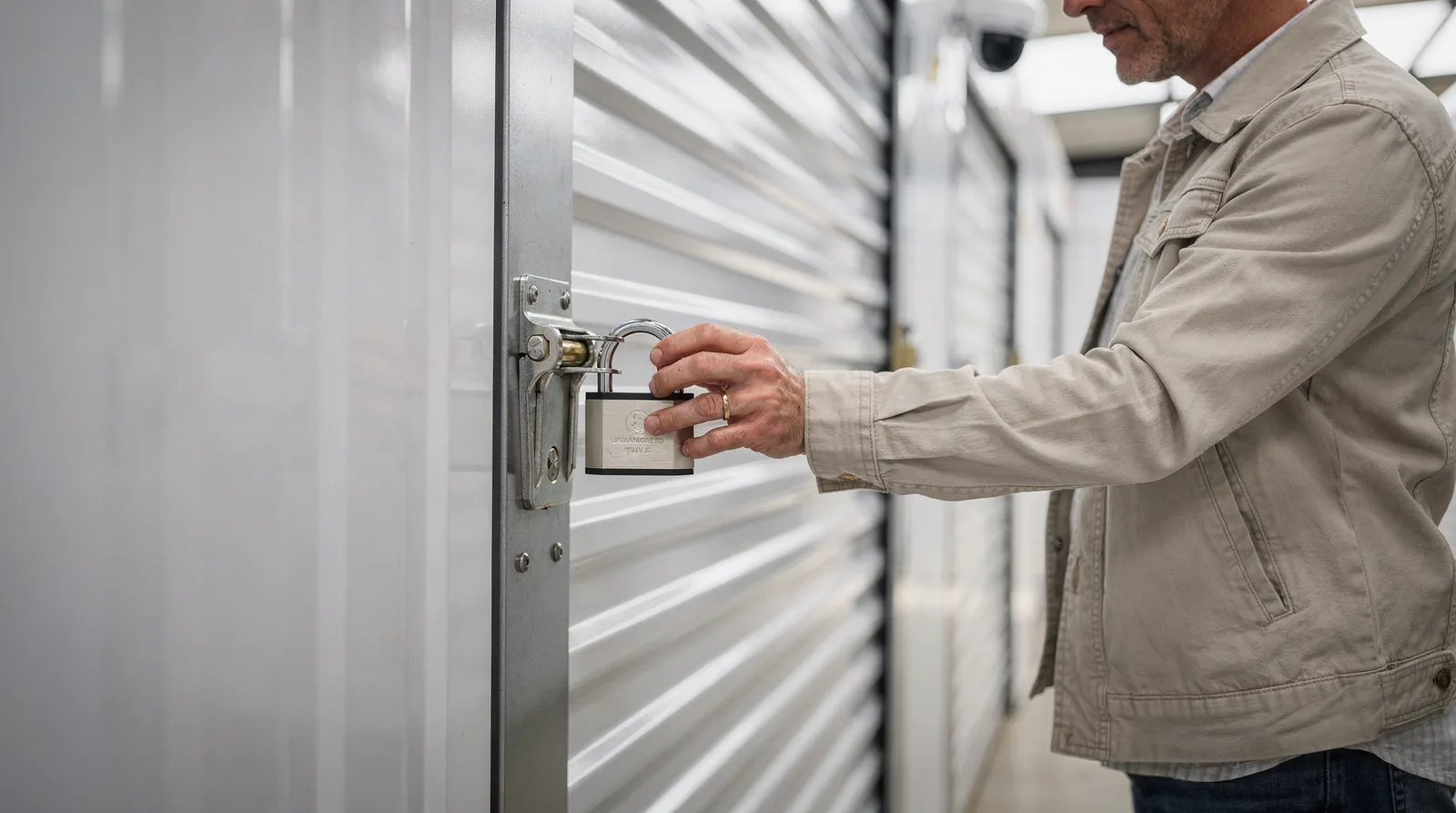
What Storage Protections Keep Belongings Safe?
Secure, climate-conscious storage facilities protect household and business goods from damage during transit gaps and long-term holds. DeVries Family Moving & Storage maintains clean, state-of-the-art, secure storage facilities built specifically for this purpose. Losing a single heirloom or business record to poor storage conditions costs more than money — it costs trust. That’s why storage receives the same scrutiny as every other step in the moving process.
Storage arrangements don’t operate on a separate standard from the move itself. The same equipment and facility resources used to load, transport, and unload belongings extend directly into storage operations. This continuity matters: a mover with subpar trucks or handling tools rarely reverses course once items sit in a warehouse. Consistency across every phase is what keeps furniture, electronics, and fragile items intact from pickup to final delivery.
Who handles items while they’re in storage?
Trained, long-tenured staff manage stored belongings, not rotating temporary labor. An average employee tenure of 10 years across the DeVries team reflects experienced handling applied consistently to items placed in storage. That kind of stability reduces the guesswork. And the risk — that comes with unfamiliar hands touching sentimental or high-value possessions.
What actually keeps items safe in a storage unit?
Organization and equipment do the heavy lifting, not luck. Movers rely on structured processes, purpose-built equipment, and hands-on technique to protect goods whether they’re in transit or sitting in storage. Key protections typically include:
- Inventory tracking systems that log items entering and leaving storage
- Facility security measures limiting unauthorized access
- Equipment suited to fragile, bulky, or high-value goods
- Trained personnel following consistent handling protocols
Together, these elements form a protective chain that doesn’t break simply because a box sits still instead of moving down the highway.
How Does DeVries Ensure Your Belongings’ Safety?
Clear communication protects household goods as much as padding and straps do. DeVries notifies customers in advance of the loading date and provides an estimated delivery day. Belongings never disappear into a black box during transit. Owners always know where a shipment stands, from pickup through arrival. That transparency reduces the anxiety that often accompanies handing over furniture, family heirlooms, or business equipment to strangers.
Reputation matters just as much as process. Moving and storage services built on decades of operation carry a different kind of accountability than a company formed last year. DeVries has served the Treasure Coast and South Florida region for over 21 years. Holds a Better Business Bureau A+ rating, a distinction that reflects consistent customer satisfaction rather than a single good review cycle.
Is there a cost to get a safety-focused estimate?
No. The on-site estimate is free and carries no obligation. A representative visits the property, reviews the inventory, and outlines exactly how fragile or high-value items will be handled before any contract is signed.
How can homeowners verify a mover is legitimate before booking?
Federal guidance from FMCSA recommends checking the Registered Mover Database before hiring any moving company. This step confirms proper registration and adds a layer of protection against fraud.
Together these practices form a simple checklist for anyone vetting a mover:
- Confirm advance notice of loading and delivery timing
- Verify years in business and BBB rating
- Request a free, no-obligation on-site estimate
- Check registration status through the federal database
Each step narrows the gap between hoping belongings arrive intact and knowing the process behind that outcome.
Protecting your belongings during a move requires a comprehensive approach encompassing proper packing techniques, appropriate equipment, trained personnel, and secure transportation methods. Moving and storage companies that prioritize these protective measures demonstrate their commitment to safeguarding your possessions throughout the relocation process. By selecting a provider that emphasizes these standards, you ensure your valuables receive the professional care and attention they deserve from start to finish.
FAQ
How do movers protect fragile items during packing?
Movers use sturdy, double-walled boxes for structural support and wrap each delicate item individually in bubble wrap or packing paper, preventing surface-to-surface contact and damage during transit.
Why does DeVries Family Moving & Storage recommend booking four to six weeks in advance?
Advance scheduling gives the crew time to plan packing materials, equipment, and staffing for fragile or high-value items like pianos, artwork, and antiques before moving day.
How can customers verify a mover’s legitimacy before hiring one?
Customers use the FMCSA’s free registered mover database to confirm a company’s active operating authority. Legal standing before committing to any moving service.
Facts
- DeVries Family Moving & Storage is located in Port St. Lucie, Florida, US.
Conclusion
Protecting belongings during a move comes down to preparation, trained hands, and consistent standards applied at every stage — from the first on-site estimate through final delivery or long-term storage. DeVries Family Moving & Storage builds these safeguards into each relocation: verified registration and licensing, reinforced packing materials, dedicated handling for specialty and high-value items, and secure, well-maintained storage facilities staffed by experienced, long-tenured crews. Combined with clear communication before and during the move, this approach gives homeowners, renters, and business owners a straightforward way to judge whether a mover will treat their possessions with the care they deserve.